Statement of Martial Equality in Training
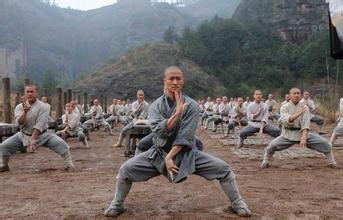
Within villages, towns and cities of ancient China, the requirement for the population to protect itself extended to every member of the community regardless of age, gender or status. As the genetic coding of the human species is diverse, logic dictates that each individual, regardless of the standard or quality of the martial training they receive, will manifest varying degrees of competency and mastery. As there are many components that constitute communal self-defence, it is logical to state that only a few trainees will truly master every aspect of the martial art, and that the majority will be able to master specific aspects that are suitable or relevant to their character (or life), at any particular time in their training career. This means that although everyone may well try to an equal degree during the training process, the results of the training, across the population, will be varied. For communal self-defence this diversity worked in the favour of communal self-defence, as the domestic settings, climate and conditions varied from place to place, as did the requirements to defend these areas well. The diversity in martial ability fitted exactly the diversity in communal defensive requirements in a manner that would not be the case if every trainee had attained a level of ability that was too specific and therefore not robust or rugged enough to adapt to changing conditions on the ground.
Important to this assessment is the reality that people learn at different rates and in different ways. Some will learn quickly but lack experience, whilst others will learn slowly and simultaneously acquire experience as their understanding deepens. In fact merely appearing to learn the outer movements of a martial art in a short time is of little use to communal defence without the requisite knowledge and experience which guides the application and use of that understanding. Therefore those who appear to learn quickly are not necessarily the best martial artists, and the ability to absorb facts quickly is not necessarily a sign of trustworthiness whilst under the duress of self-defence conditions. It therefore logically follows that many of those who appear to exhibit a superior martial technique when training within the artificial conditions of a training hall, may not be able to manifest the same level of efficiency whilst engaged in actual combat conditions. It also follows that those of mediocre abilities in the training hall may well be able to maintain this level of ability whilst operating within combat conditions. Of course, it also has to be acknowledged that there are exceptions to every rule. Communal martial arts were primarily for self-defence, and only became ‘developmental’ if the trainee survived long enough in his or her life to begin the ‘deepening’ process of training, to keep the mind active and the physical body strong. Here is seen the transition of traditional Chinese martial arts from a ‘communal’ footing (where a trainee may well have to survive participation in a battle or war), to an ‘individual’ emphasis, where a trainee seeks to develop virtue and wisdom, good health and compassion. Whereas communal defence ensures the safety and survival of the community from external attack, individual development is designed to raise the moral and health standard of an individual within the community. Individuals who master both communal and individual self-defence, are of course, expected to share their developmental wisdom with the community at large. This entire process requires strict discipline, honesty, tolerance, compassion and a sense of equality if it is to function properly. Approaching training in the wrong manner limits both the welfare of the community, and the welfare of the individuals within the community. Shifu Adrian Chan Wyles 29.01.2016 |