|
We train when we are young because we do not yet appreciate what ageing is. Yes - we see ageing all around us in the plant and animal kingdom - and it is usually through the trauma of a deceased pet that we first experience the sadness and grief of the permanent "separation" associated with death. We might also experience the passing of an older relative - usually a grandparent or the like - with some suffering the tragedy of losing a sibling or a parent at a relatively young age. On top of all this are the unseen shadows cast by accidents and criminality. In-short, "death" might come knocking at any time with the proviso that the decent adults around us tend to act as an emotional buffer-zone. This is important as when young we are adults in training so that one-day we might take our place on the frontlines of life and robustly shoulder all the difficult tasks allotted to us. For some generations this duty might extend to actually fighting in bloody wars - and so the cycle turns. For the traditional and sporting martial artist - our bodies are our weapon. Although our bodies constitute the biological machine into which "we" are born and from within which our individual "consciousness" derives - in the early days of human evolutionary existence - the body was also the means through which outside threats were absorbed (in the sense of "blows") and dealt with (in the sense of counter-reactions). Later, the human brain developed the ability to utilise the environment to assist this survival capability. A stone and a stick could be individually used to attack and defend (the early meat-eaters attacked and killed their prey) against the enemies of humanity. When the stone was tied to the stick - humanity's first "super-weapon" was devised - bestowing an insurmountable advantage at the time. Others initially did not understand how this weapon was made or used - but all could see its dreadful efficacy. Physical dominance through power also began the political stratification of human society premised upon the "haves" and the "have nots". Eventually, whilst one group lorded it over another - it became obvious that regardless of how humanity organised its internal structure - there were very real external enemies that offered immediate threats to ongoing human survival. To combat this, it became obvious that what advantaged a certain strata of society had to be taught to each new generation so as to retain the shape of human society within whilst defending the human species from external attack. As the early martial arts were linked to a) nature, and b) the "unseen" world of the spirit - the physical shapes chosen were those assumed by different animals - together with their different attitudes. This formed the basis of Chinese martial arts - usually practiced as part of a shamanic ritual that opened a door between this (material) realm and the (unseen) spiritual realm - the place dead people were assumed to have departed upon death. From what I gather, all early human gatherings pursued this path of development across the globe - which explains why the British Celtic culture has distinctly "Daoist" undertones whilst possessing no direct link with China. All human groupings evolved out the same material stuff with its distinct and diverse peculiarity (the animals and environment may differ - but all this stuff exists within "nature"). In the modern and post-modern era - the individual does not need to practice traditional martial arts as industrialised warfare has moved on - so as to render individual bravery more or less redundant. Tens of thousands can be wiped-out with modern missiles without ever taking to the battlefield or engaging with the enemy. As the contemporary authorities tend to view the traditional martial arts as an anachronism - they tend not to be bothered by their existence or practice (as the training is unnecessarily arduous for no real material gain). Although the bodily movement may be perfected to a vey high degree - and the mind inwardly developed to a rarefied level of perception (perhaps akin to that of Medieval monks alleviated to Sainthood). Indeed, this is what martial artists "choose" to do in the modern era - for no real reason at all. For each individual, the voluntary practice of a spiritualised martial art links each contemporary person to their ancient ancestors. As it is broadly linked to "spirituality" (any form of spirituality either defined or not defined) - its practice is viewed as "morally" uplifting, good, and wholesome. All this being said, those of us who are committed to this path understand just how sophisticated this traditional martial practice is - and this is true regardless of whatever strand it is that we choose to follow. Regardless of "difference" in style, or origination, (and despite the "differences" that might exist) - we all have to follow distinct phases of practice - which many followers never complete (some practice for a time and then life takes them in other directions). For those of us who are fated to practice into old age - we must spend time practicing the physical technique in isolatory and collective practice - whilst learning from those "who know" - before learning how to teach others and act as a role-model in society. Despite how difficult this is (which varies according to inner structure regarding grading, non-grading, and sometimes sporting success - together with honour fights and all types of unusual challenges) this is not the higher levels of mastery. This level of mastery involves perfectly understanding how the inner and outer body functions and manifests - and how the conscious mind permeates every atom and cell with light. As we age, the body changes according to a learned evolutionary response to existence. To clear the way for the next generation of youthful vigour - the older generation possesses a genetic programming which see the body sabotage its own operation through the cellular structure slowing falling apart. Medicine can prolong this process - but it cannot stop it (as matters stand). Each of us "masters" must navigate our way through this process by keeping a constant mind-set that sets an example for the youth (who are not yet able to comprehend exactly what death is). On top of this, although our advanced martial arts ability (which is perfected perhaps in middle-age - sometimes earlier - occasionally later) - this transcendent ability must continue to be expressed regardless of age or state of the older body. An older body might be ill, injured, or otherwise disabled - whilst the spiritual (mindful) centre of each individual must retain the ability to "shine" with positivity and light into the void that is death. Furthermore, even an ill or disabled body when young can still perfect martial arts in this capacity - with the body's dysfunction simply being yet another problem that must be conquered and transcended. This is similar to overcoming injuries suffered by those who do not possess a disability.
0 Comments
Author's Note: When young, the mind is narrow but the body is broad. When old, the mind is expansive and the body is narrow. Both realities must be thoroughly acknowledged, understood, developed, and integrated. As the body ages, the enhanced awareness of the mind takes the place (and enthuses) the former youthful functioning of the (younger) body. When young, a mind without an enhanced awareness (which must be earned through experience) - is replaced by the blatant strength associated with youth - an important part of human survival and evolutionary development. Youthful strength is not an error - but a requirement in life. Traditional martial arts mastery is a different achievement which does not need to be accomplished by every human-being - but can be achieved by some dedicated individuals. Secular monasticism is a vehicle through which an individual can renounce attachment to private property and worldly cycles of self-hindering material accumulation. Buddhist monasticism can serve as a vehicle for "emptying-out" the inner conditioning that arises from greed, hatred and delusion - as such - religion (and religious differences - including atheism and non-theism) does not have to enter into it. I suspect the ancient Greeks encountered Buddhist monasticism when visiting India (such as Pythagoras), learned the Buddhist method of "looking within", and then adjusted the technique as a means to "prove" the efficacy of their particular philosophical perspectives (the work of Plotinus may be taken as an example of this endeavour). Later, via the Greeks, a community of Jews (in Qumran) started sitting in meditation to personally attain a "glimpse of Yahweh" - a practice that eventually spread to the reformed Jewish sect of "Christianity" - whose adherents started to meditate whilst sat in the caves found in the Egyptian Desert (this type of Christianity spread to Britain - hundreds of years prior to Catholicism - becoming "Celtic Christianity"). Buddhist monasticism does not require a belief in theism to be effective. Many Greek schools of thought, for instance, sought to establish or discover various views pertaining to the natural (material) world. The same observation can be applied to various Hindu school where consciousness and material environment is not directly associated with a theistic entity. Whatever the case, protecting the psychological and physical space within which a martial artist exists - is the entire purpose of any traditional Chinese martial arts school. Young or old - this is the beginning, middle, and end of legitimate Chinese martial practice! ACW (18.4.2025) We can all become extraordinarily fit at different times throughout our lives. Part of the reality pertaining to physical and psychological fitness, evolves around the concept of developed understanding. In other words, the level of effective (physical) fitness evolves around the (psychological) maturity of the individual concerned. The greater the understanding of the processes involved – the more effective the fitness the greater is the efficiency of the required output – usually expressed through various sports (unless one happens to be a professional soldier). This is all well and good – but fighting for one’s life is not the same as fighting for a coloured belt, trophy, or medal, etc. One question I ask MMA practitioners – or any of the sporting martial arts practitioner – is that if their art is so effective in reality, why is it that professional armed forces do not make use of these arts? The answer is that “sport” has gentlemanly rules which curb human aggression, and generate a climate of artificial “fairness” and “co-operation”. For children, and young people, this is positive and nourishing (children should never be exposed to the horror or reality of warfare). When not in a war-like environment – civility should prevail - and sport is the preferred vehicle to encourage a “safe” competitiveness – although one unfortune by-product is that the selfish ego is boosted and inflated. Sport fighting is 90% imagination and only 10% reality – with full-contact martial arts, MMA, Thai Boxing, and Western Boxing, etc, representing the more realistic end of the spectrum. However, sport realism is not battlefield brutality. Dealing with the shock of battle might require stepping in (and through) human blood, entrails, or various types of human offal. People with smashed-bones will be screaming, shouting, laughing, and carrying-out all kinds of despicable acts - either permitted or forbidden by the established rules of war. Battlefield hand-to-hand combat is certainly not gentlemanly – and it is unrealistic to assume that it is. A Bayonet charge is all about high-energy and immense and continuous brutality until all the battle objectives are achieved – or the bayoneteer killed. This is just one example. Drones are now causing all kinds of brutality on the Battlefield – and a coloured belt around the midriff is of no use whatsoever. Genuine traditional martial arts (usually types and variants “Longfist”) are employed by the People’s Liberation Army (PLA) of Mainland China. Physical and psychological robustness on the battlefield (not the training hall) is emphasised. These are soldiers who train in every relevant modern weaponry available – including the most destructive technological variants (weaponry is both tactical and strategic). A similar situation exists throughout Western armies where boxing and MMA are not used on the battlefield (although such pastimes might be encouraged as a form of military-related leisure). And yet despite this distinct “modernity” in weapon use – there is a belief that after all the firepower of the various weapon-systems have been exchanged - a battle might still be decided “man-to-man” in hand-to-hand during close-quarter combat. Eye-gouging, biting, head-butting, groin ripping, throat-crushing, finger-breaking, nose breaking, ear-ripping, knee-dislocation – and any number of similar nasty techniques are regularly used. Real combat is about inequality. Real combat is about establishing (and maintaining) a terminal advantage over the enemy. Victory and survival are causally linked. Of course, the State does not care if its soldiers live or die (despite rhetoric to the opposite) – just as long as all the State’s military objectives are achieved for the least amount of money (not lives). Soldiers are expendable – because that is the function of being a soldier (someone who fights for pay). A mercenary is simply a soldier who fights for anyone who is willing to pay – regardless of cause and nation. The traditional Chinese martial artist trains his (or her) body to be able to perform this function (utter brutality) – whilst retaining a calm and expansive mind-state that is reflective and unruffled under duress. Traditional martial arts practice assumes the reality of the feudal battlefield – even if the practitioner is not serving in the armed forces of their respective countries (of course, an individual might or might not be a professional soldier – but a civilian practices martial arts with an enhanced sense of combat-reality whether living in a village, town, or a city). Assuming the traditional Chinese martial artist survives a) the ongoing and arduous training (which will be harsh with no material gains such as belts, medals, or trophies, etc) and b) any experiences of actual combat (either on the street or the battlefield). If all these challenges are met, which will include regular (unpadded) sparring and “honour fights” – then the traditional Chinese martial artist must adjust to circumstances as the body “ages” and transforms through the experience of maturing (this includes illness, injury, and disability). The body changes and the mind-awareness deepens. The body is no longer young and will not manifest as a younger body normally does. Despite this, a lifetime of experience will shine through, and a natural dominance will emerge. An older practitioner will understand and control a situation involving younger people as opponents – because those younger people (although full of the vigour of youth) will not possess the ability to “perceive” what is happening – at least not to the extent of the elder and more experienced practitioner. For many years, a dedicated martial arts practitioner will always experience “confusion” whilst participating in the midst of unarmed combat. It is only as time progresses that a student’s mind will “calm” and a pristine awareness takes its place. Before this change can happen, however, many sporting martial arts practitioners cease training in their chosen martial art (early) usually in their late 20s or early 30s (not granting enough time for any substantial inner transformation to occur) – whereas traditional Chinese practitioners must carry-on practicing until the moment of their final breath – and the body is “given-up”.
Dear Tony I remember watching a documentary about the 8th Dan Grading for modern Kendo in Japan. The World Champion of Kendo - who was in his 50s - was considered "too young" for this grade, and immature. He was driven by ego-achievement and the Panel of Kendo Masters refused to grant him the 8th Dan Grade. He was failed continuously and sent back to his Dojo to continue training. Another example featured an 80-year old Kendo Master who was highly respected - but he was failed for being "too vigorous" ("too youthful") in his approach. The 8th Dan Grading including sparring and a written examination - with both components being equally important. A clip was shown of an Old Kendo Master who had attained the 10th Dan. He stood naturally dominating his ground, and with little effort always decisively "struck" his much younger opponents. This Master explained that when 60 his legs stopped working properly (as in his younger days), whilst at 70 his arms stopped working properly (as in his younger days). Whilst at 80 his "awareness" expanded to incorporate his body and entire environment - so that he respond internally and outwardly like a mirror reflecting all that is happening. I have met many in the West - and the modern East - who see martial arts as a youthful sport which probably should not be participated in much past 30. Of course, for those of use who continue training well beyond this age (Master Higaonna Morio is an impressive 85) - perhaps our "transitional" experiences might be of some help in a culture that focuses on the young and ignores the elderly. About 20 years ago, a Western American man who was still practicing gongfu at 65 said to me it was as if he had "become" the Style - rather than forcibly practicing the Style from without (like putting on a hat). Just some thoughts.
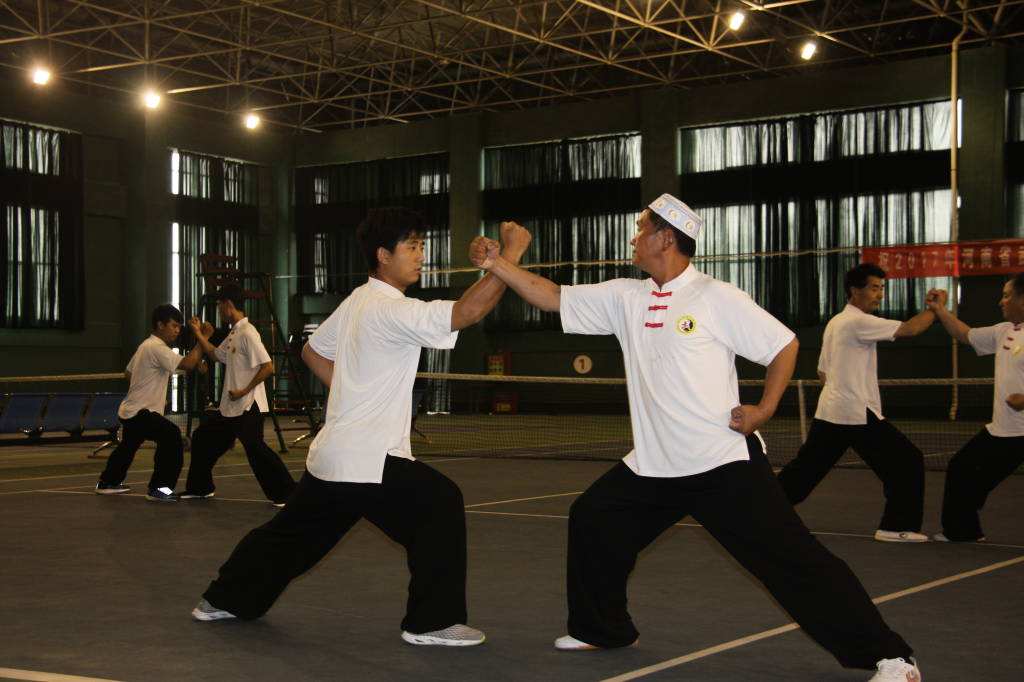
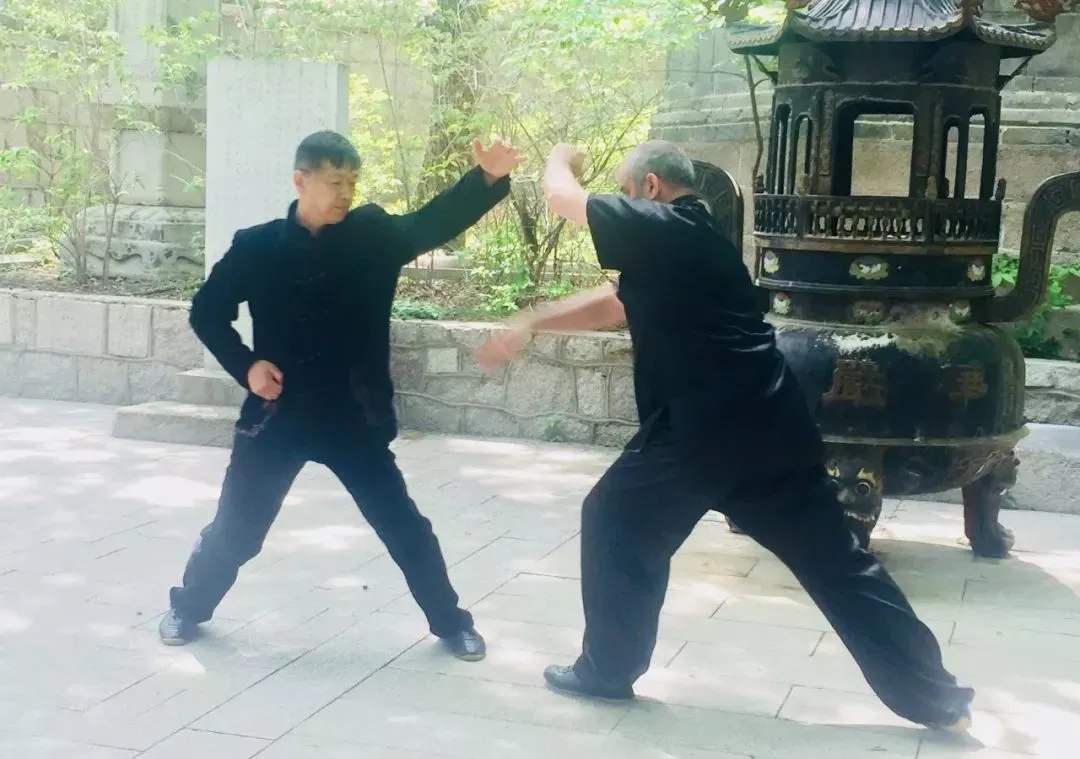
If a practitioner of traditional Chinese martial arts spends twenty, thirty or forty years perfecting his or her art – then such an individual will experience many different levels and layers of reality as the ageing process unfolds. Of course, much of this will be circumstantial and culturally conditioned (varying from place to place, country to country) - but the ongoing experience of observing the inward biological and psychological process will always possess a certain universal reality common to all human beings. This is true despite many modern people linking their physical activity to the notion (and vagaries) associated with modern sport, commercialism and entertainment, etc. Therefore, many people living in the modern age often think that any sustained physical activity should cease around the age of thirty years old – as the first glimmer of the ageing process begins to make its presence felt! This idea seems to advocate the passive ‘giving-in’ to the ageing process and simply settling for a body that can no longer function as does the body of an eighteen-year-old – and which gets less able as the decades pass due to a terminal inactivity.
A genuine martial artist seeking mastery of body and mind must acknowledge and accommodate the ageing process. As the inner processes and the outer structures of the physical body transform, the traditional Chinese approach has always presented the ageing process as a doorway to a higher form of awareness, perception and physical ability. The modern, Western approach states that the human body becomes weaker the longer it lives. The onus upon this thinking is that this is the most meaningful interpretation of the ageing process and that no other view of the ageing process is required. Linked to this idea of a decrepit body is an entire medical industry offering expensive mechanical devices that assist the body as it weakens – together with entire rafts of various medicinal treatments designed to lighten the ageing process. This is only for the wealthy, of course, and although the scientific alleviation of the ageing process may well be a valid and important one if it were not so exploitative – my point is that as functioning individuals – we are responsible for our own awareness as it functions throughout the biological body and permeates the physical environment. There is nothing wrong with being ill, disabled or otherwise incapacitated. Ageing and illness are biological inevitabilities and should not be denied in anyway. The awareness capacity, however, as far as I am concerned (as I enter my 55th year of life) – is the only way a human being can adjust him or herself to the ever-changing circumstance that defines the ageing process. Not just being ‘aware’ in a passive manner but being ‘aware’ in a proactive manner that permeates the atoms and molecules of the physical body, and which strives to moderate behaviour throughout the physical body. Ironically, being ‘still’ in exactly the correct manner is an important part of traditional Chinese martial arts, which is the foundation of an enhanced (and evolutionarily) advanced ability to manifest the human body within the physical environment. This means that the manner in which the inner human body is perceived changes completely when the ageing process unfolds. Indeed, the ‘internal’ and ‘integrated’ methods of advanced Chinese martial arts practice are dependent upon being ‘old’ and the experience of getting ‘older’. As the out of date (and ‘lazy’) habits of youth fall away, then ‘new’ and more ‘intelligent’ methods of generating stability and power must be cultivated. Extraordinary amounts of stabilising power must be generated and sustained with as little conventional effort as possible. Conventional effort is the driving mechanism of youth which changes as the ageing process advances. It does not ‘disappear’ as many think but transforms and evolves – but many remain completely unaware of this developmental process. This is where the shallow (commercial) culture of the modern West fails the very individuality it creates. This is exactly where the ancient ideas of evolving conscious awareness and physical abilities come into play. When striking the heavy bag, the torso and limbs feel simultaneously ‘light’ for speed and ‘heavy’ for stability. The body is ‘relaxed’ whilst the limbs and torso are positioned perfectly so that the dropped bodyweight can be effectively rebounded from the ground and channelled into the target through the centre of the bones (which feel ‘hollow’ when performing this function). Furthermore, the ‘weight’ of the heavy bag can be momentarily absorbed into the bones and joints of the attacking body (that is the ‘hollow channels’) – before being dramatically expelled back out and into the heavy bag itself – being added to the bodyweight and effortlessly increasing the all-round impact of the punches, kicks, elbows and knees, etc. Meanwhile, as the ageing process unfolds, a tangible sense of space is permanently perceived as existing throughout the inner body which is filled with an energy that is vibrant, full of light and is a combination of physical bodyweight properly used – and an enhanced sense of psychological ‘awareness’ (which also expands outward and into the physical environment). I believe that this is a preparation for old-age and the eventual dying process – whereby the physical body drops-away and the psychological awareness folds-in upon itself. Email: Appendum - Mastery Defined That Transcends Ageing, Injury and Ill-health! (29.10.2021)10/28/2021 As human beings we exist (and have evolved within) a gravitational field. Most traverse their entire lives unaware of this fact in its practical and/or theoretical basis. External martial arts are the product of young people using their will-power to move their torso and limbs through this gravitational field in an inefficient but useful manner which sees the generation of a great force (only at the highest levels) which is far beyond the level of energy expenditure used to manufacture it. To achieve this the cardiovascular system must be made efficient (through running), whilst the bones, muscles, ligaments and tendons must be 'toughened' through regular usage. The mind is strengthened and focuses through repeated arduous training and familiarisation with the corresponding (physical) pain. The mind learns to use the body very much like a 'slamming door' with no regard to the state of the inner body or the health of the inner organs. At the external level (which must be mastered), the physical body is 'forced' through the gravitation field and it is the resulting 'resistance' which can generate substantial force. This type of power is entirely dependent upon the body being at a continuous peak of physical fitness - which is a state very difficult to maintain without the body structures being allowed regular periods of complete rest (so as to recover). A problem with this method involves illnesses and injuries getting in the way of achieving peak levels of fitness - and the ever-present problem of the ageing process. Within ancient China, the external training for combat could produce confident and solid soldiers in around three-months of continuous and systematic training. However, if an individual survived both the training and the combat experience on the battlefield, then what? The ancient Chinese understood that with age came both enhanced understanding of reality and a much more subtle appreciation of the human body and the environment it inhabited. This is how 'internal' training was established often hinted at by Confucian and Daoist ideology - and later Buddhist thought. This involved the mind being trained to be aware of how gravity operates through the bone-structure of the skeleton. The ancient sages realised that without any muscular effort (or corresponding psychological angst) whatsoever, gravitational 'force' effortlessly drops down through the centre of the bones (stimulating the bone marrow in the process), and enters the ground ('rooting' the practitioner) before a 'rebounding' reaction occurs which sees a corresponding 'force' travel back up through the centre of bones to the top of the skull. This process occurs simultaneously without interruption, contradiction, or paradox. It only ceases when the human body leaves its familiar gravitational field. (Chinese Cosmonauts have been experimenting in the zero gravity of space to see if a modified Taijiquan can assist in the preventing of soft bones during long space flights). The internal practitioner trains their mind to become aware of this free reservoir of energy and to propel it throughout the body, regulated by the martial techniques of Taijiquan, Baguazhsng/quan and Xingyi, etc. This means that without having to move to generate power (as in the external model) power is immediately available 'here and now' whilst standing on the spot. As virtually no undue effort is required to produce it - this power is far stronger, penetrative and destructive than its external variant. The nature of internal power is like a spinning vortex whilst remaining free of any contrived violence. This is deployed in combat not through any form of aggression, but rather as a matter of gentile timing and positioning. Providing this skill has been thoroughly learned, then there is no need for any undue effort. At the highest levels, quite often it is the case that elements of the external and the internal are deployed simultaneously without contradiction and allows from the higher ground of the internal perspective. This is why old Masters with considerable health problems are still unbeatable in the training hall - even days or hours prior to their deaths! I wanted to make it clear that by mastering the internal method - poor health due to age, injury or genetics is transcended. Where many cannot detach themselves from their physical characteristics, the internal Master 'has already left' so-to-speak. Either way, and whatever the case, there is only love in the process with the internal giving the maximum chance for a possible recovery of poor health - even if it is unlikely. Seated meditation, by the way, is essence 'internal' and this is why the old Masters practiced it. Life can be preserved and prolonged even within illness and poor health. For some people this is needed because they have unfinished business to complete.
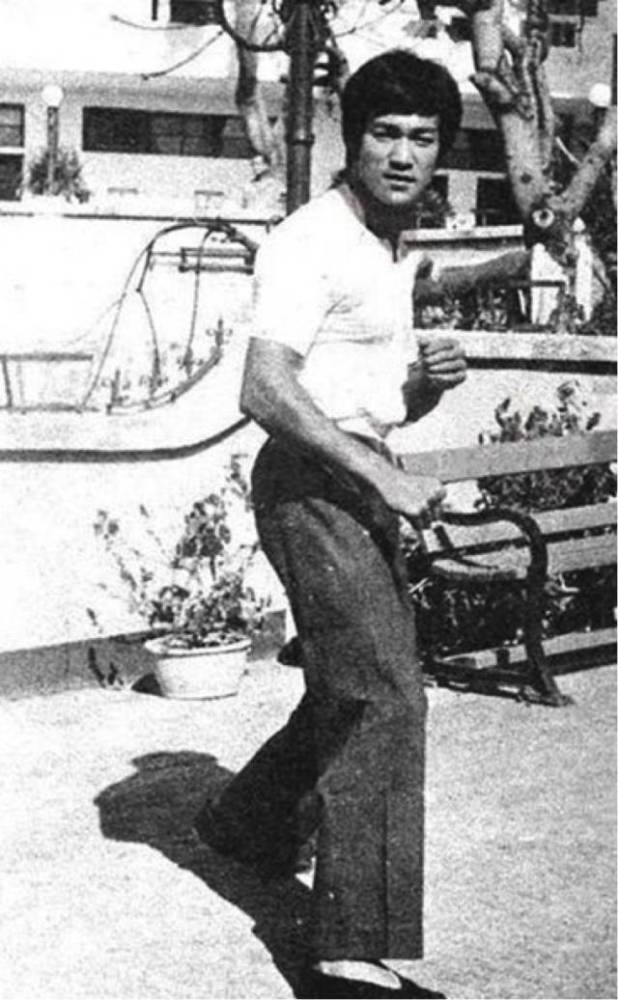
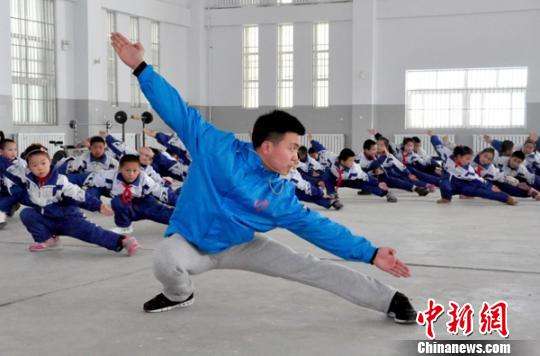
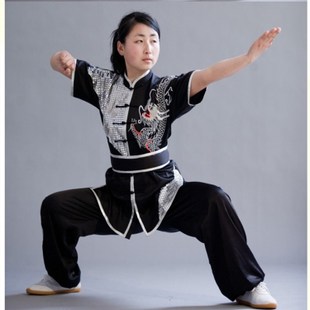
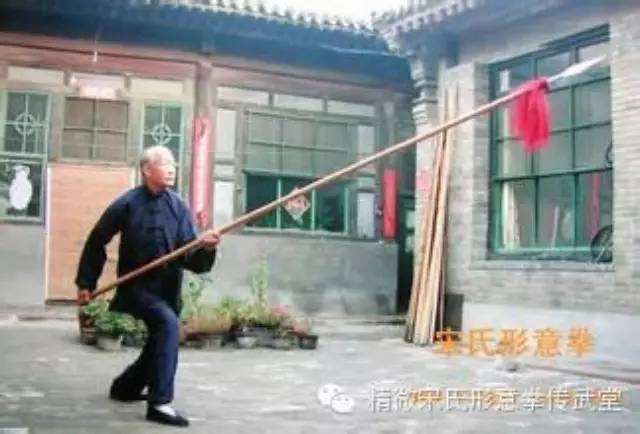
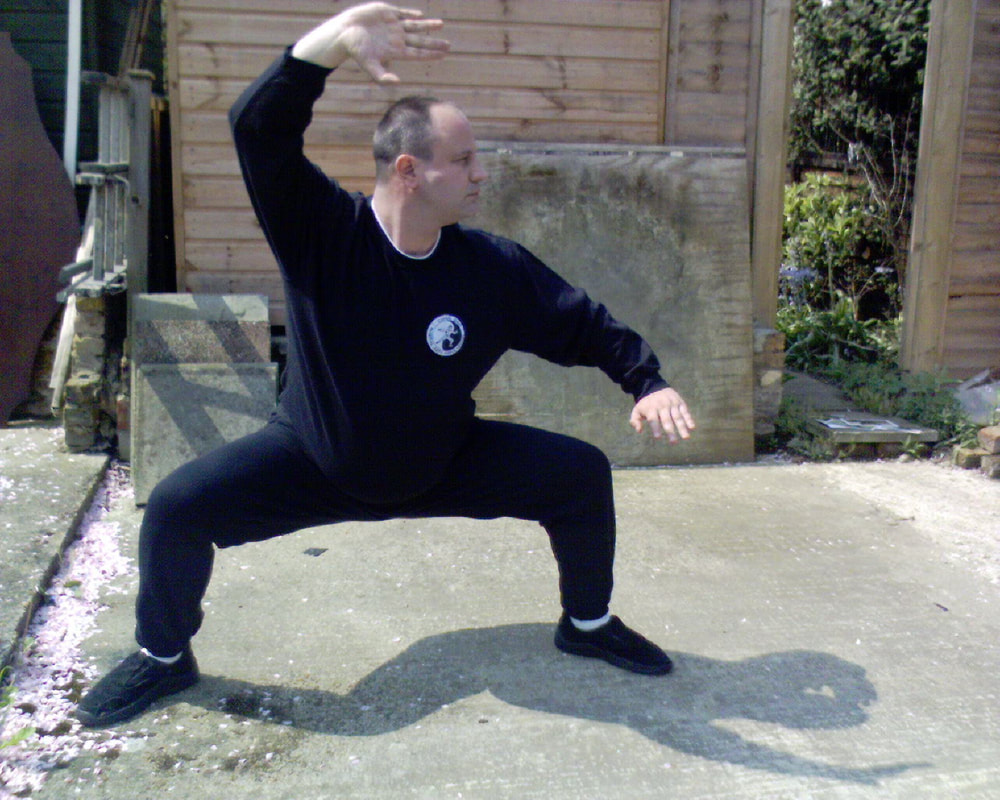
Dear Nick A very interesting (internal) Longfist Form! Master Zhao Ming Wang forwarded this video of a Qianfeng Disciple. This is a traditional mode of practice just like our own in the Ch’an Dao School. Of course, what follows is not a discussion on the movements perse, but rather the manner in which these movements are performed. Developed insight and seasoned will-power is a matter of a good and fully-rounded ‘intent’. This is the exact opposite to what is expected in the training and technique designed found in the ‘audience-pleasing’ practicing for sport. For sporting purposes - the movements are speeded-up for dramatic effect. This changes the leg use, balance and coordination. Sporting forms are practiced 'top down' which is good for audience entertainment but sacrifices a good and effective 'root'. Proper (traditional) form training for fighting is practiced 'ground up' (like the building of a hexagram in the Book of Changes) and unfolds like an arrow fired from a bow (or a bamboo stick stuck firmly in the ground - which is pulled back and suddenly 'released'). Sporting forms push the generated power downwards whilst simultaneously denying any strong or stable leg structure for 'rooting' - so that its is wasted and dissipates into the air without effect. Traditional forms - such as seen here - generate the power from a firm and stable base and then radiate that power upwards and outwards in all directions. The 'shape' or 'technique' chosen or assumed (such as a lead straight punch front and back - or a front-kick and a palm-block, etc) - harness and directs this generated power, into a focused emission suitable for a particular self-defence requirement (expressing 'stopping-power'). Although practicing forms at lightning speed is good every now and again (whilst retaining the 'root'), it is better to practice like the practitioner in this video so as to continuously perfect the 'foundation' - as each repetition removes a layer of doubt in one's ability (from the mind and body). As the body ages, this type of 'internal' exercise ensures a constant standard of practice as the physical processes and psychological perception both mature. Notice how the drop-down stances are not as deep as those found in Taijiquan to facilitate a smooth interaction of the movements. These Longfist forms possess drop-down stances that can be performed ‘deep’, ‘moderate’ (as seen here), or ‘high’ for various adaptions of training. Each type of low-stance must be perfected by the Longfist practitioner as a preparation for the different requirements of all-round self-defence. It is best to master the low-stances when young so that this ability can be retained and applied to the body as it ages.
It is best (or most advantageous) to perfect martial movement during the first half of your life – say aged 0-50 years – and then use that experience to integrate with the changes that happen to the mind and body from 50-100 years, etc. This is the ideal model. However, many people are not in a position to achieve this for various reason, and so a more serious attitude of self-organisation is required. The distractions of youth are interesting and enjoyable, but even when young there should be an inner core of training-attitude that is isolated from the worldly life. This oasis of peace, quiet, tranquillity and harmony will allow for the development of a deep and profound state of mind, the awareness of which will thoroughly ‘penetrate’ all aspects of bodily movement within the martial context. This is the traditional way which becomes ever more important the older a practitioner becomes. Do not become distracted by the ego-accomplishments of worldly-markers as these things, although interesting within their own context, do not give you any understanding or ability to cope with the ageing process. Those who become enmeshed in worldly concern may win this medal, that belt or this competition, etc, and although there is nothing inherently wrong with this, many people involved in such a superficial path simply ‘stop’ training at around 30 years of age because no one ever taught them about ‘what happens next’. If a practitioner must become involved in combat-derived competition, participate quickly, prevail swiftly and leave, as there are much more important martial elements to master.
Form movement is the key to mind, body and environmental mastery. A Form passes on the physical and psychological aspects of the martial lineage concerned. Intense practice when young allows for the dialectical elements of training to continue to permeate (and penetrate) the body and mind long after physical practice has ceased. The physical movements coupled with their reflection in the mind generate spiralling cycles of growth throughout the body-cells that eventually continues even outside of times of formal training. Ageing happens for a reason, and has many positive elements to it, as even young people age. With age comes maturity, experience, understanding, mastery, appreciation, wisdom, compassion, loving-kindness and selflessness. There is a certain ‘joy’ to giving-up the tyranny associated with youth! The other side is that physical abilities change. Within youth orientated societies it is said that abilities are ‘lost’, but this is not entirely true. It is better to say that physical abilities ‘change’, ‘evolve’ and ‘mature’, and manifest in a manner that is ‘different’ from that of the mindless years of youth. Chinese martial arts are an interesting subject that has historically emerged from within Chinese historical experience. If a barracks, community, homestead or temple, etc, is attacked by a ruthless enemy, then everyone (men, women and children) are expected to ‘resist’ in one way or another, irrespective of ‘age’ (at least within Hakka Chinese family tradition). Between times of communal self-defence, people practiced the movements of martial forms to a) keep-fit and healthy (through preventative exercise), b) to perfect martial technique (i.e. retain ‘grace under pressure’ during intense combat experience), and c) deepen psychological and emotional maturity (or what might be more broadly referred to as developing a more profound sense of ‘spirituality’). Although there are numerous stages that an individual must traverse throughout their life, a paradox occurs whereby an elderly master moves with both ‘lightness’ and ‘speed’, whilst retaining massive striking-power with any part of the body that happens to make contact with the opponent. A mature practitioner knows how to correctly and appropriately ‘give things up’ without losing strength of mind or suffering any kind of detrimental reaction. Certainly, as the ageing process unfolds, the ‘physicality’ of youth is slowly replaced with the ‘psychological’ awareness of maturity. |
AuthorShifu Adrian Chan-Wyles (b. 1967) - Lineage (Generational) Inheritor of the Ch'an Dao Hakka Gongfu System. |
RSS Feed