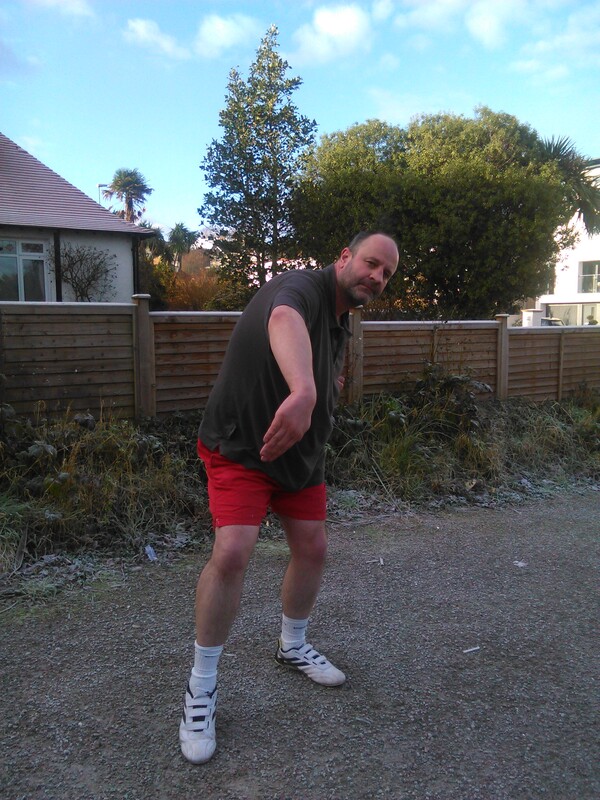
Shifu Adrian Chan-Wyles - Monkey Block
Probably from around 35-years onward, a serious practitioner of traditional Chinese martial arts should be beginning the slow transition from purely ‘external’ to predominately ‘internal’ training methods, exercises and understandings. The point of this is purely age-related – as we get older, we see more in different ways to a younger person – who naturally possesses a different type strength (which changes as age progresses). If a practitioner does not possess access to correct instruction, then he or she will not ‘understand’ how to accommodate these age-related changes, and almost always will ‘give-up’ their practice. Another factor that needs to be considered is the age that training start for an individual, as this will affect what objectives should realistically be sought-after. However, prior to 35-years old, a practitioner of gongfu should have experienced much of the ‘hard’, ‘external’ training, understand psychological and physical suffering (through direct experience), and ‘know’ how to defend themselves during a violent encounter. External ‘sensitivity’ training is very different from ‘internal’ sensitivity training. The latter example involves the turning of the mind’s awareness ‘inward’ so that a) the blood flow can be sensed, and b) after a deep-breath, the oxygen can be felt as it distributes throughout and around the entirety of the body! The point of ‘external’ and ‘internal’ training is a perfect ‘integration’ (zagong) of the two aspects so that qi-power can be manifested at anywhere on a scale from imperceptible to ‘massive’ and ‘highly destructive’. If none of this makes any sense, then train harder!
 RSS Feed